When a brand like Ford or John Deere licenses its logo, hundreds of other companies end up making the hats, boots and toolboxes that carry it. Somebody has to approve every design, ship the official hangtags and labels, track who sold what, and collect the royalties. At Octane5, that somebody was BrandComply.
I led design and front-end development there for five years, and built or helped build every module: application workflow, rights and asset management, product approvals, royalty management, brand protection, audit tracking, licensee scorecards, and the reporting dashboards.
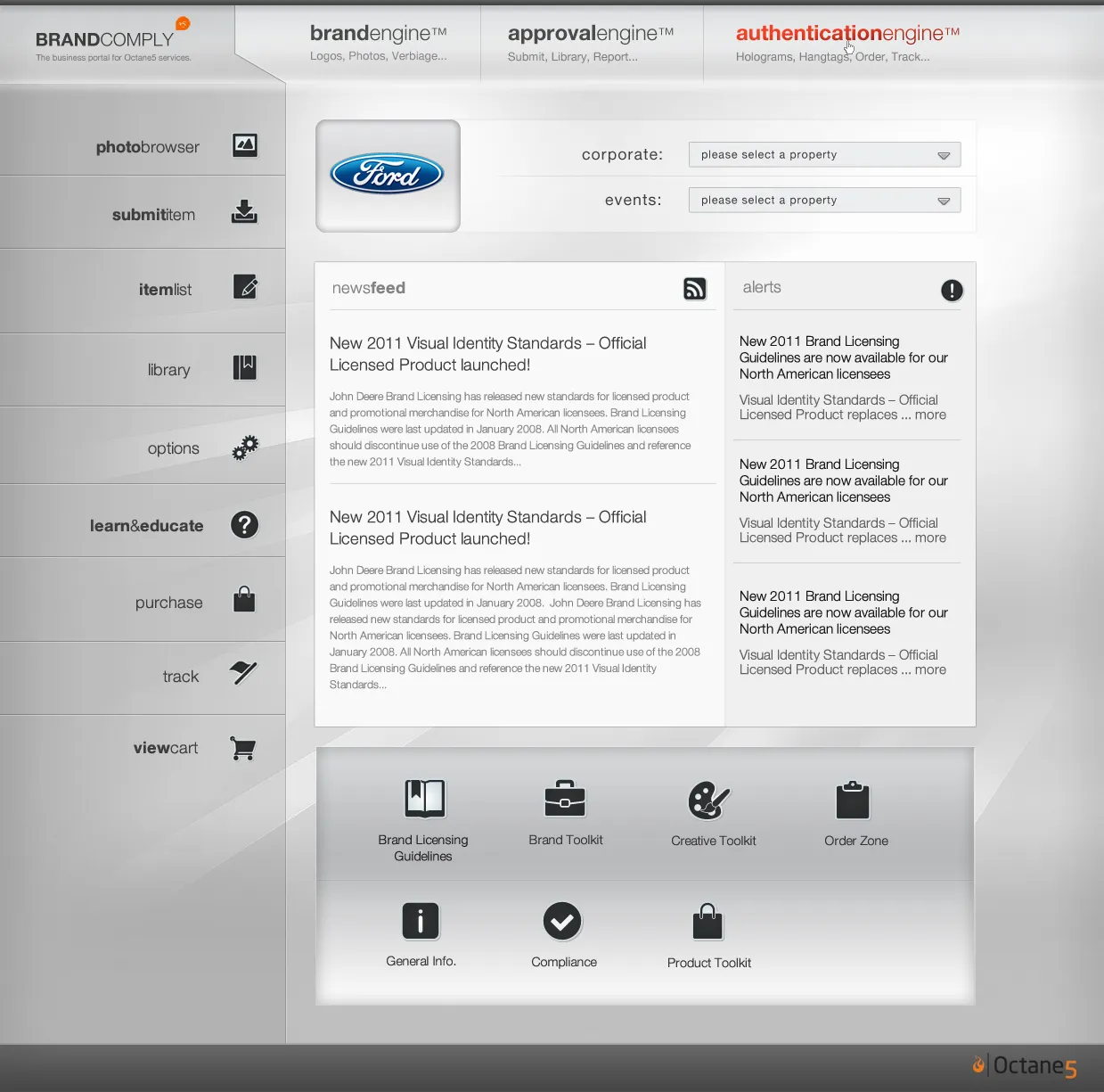
The BrandComply dashboard, themed for Ford. Design comp, 2011.
Three engines
The product split into three parts. brandengine held the logos, photos and approved wording. approvalengine was where licensees submitted a product and the brand signed off on it. authenticationengine handled the physical side: holograms, hangtags and labels with serial numbers, ordered through the portal and scanned later to prove a product was real.
Every client got their own skin over the same code, down to the mobile app.
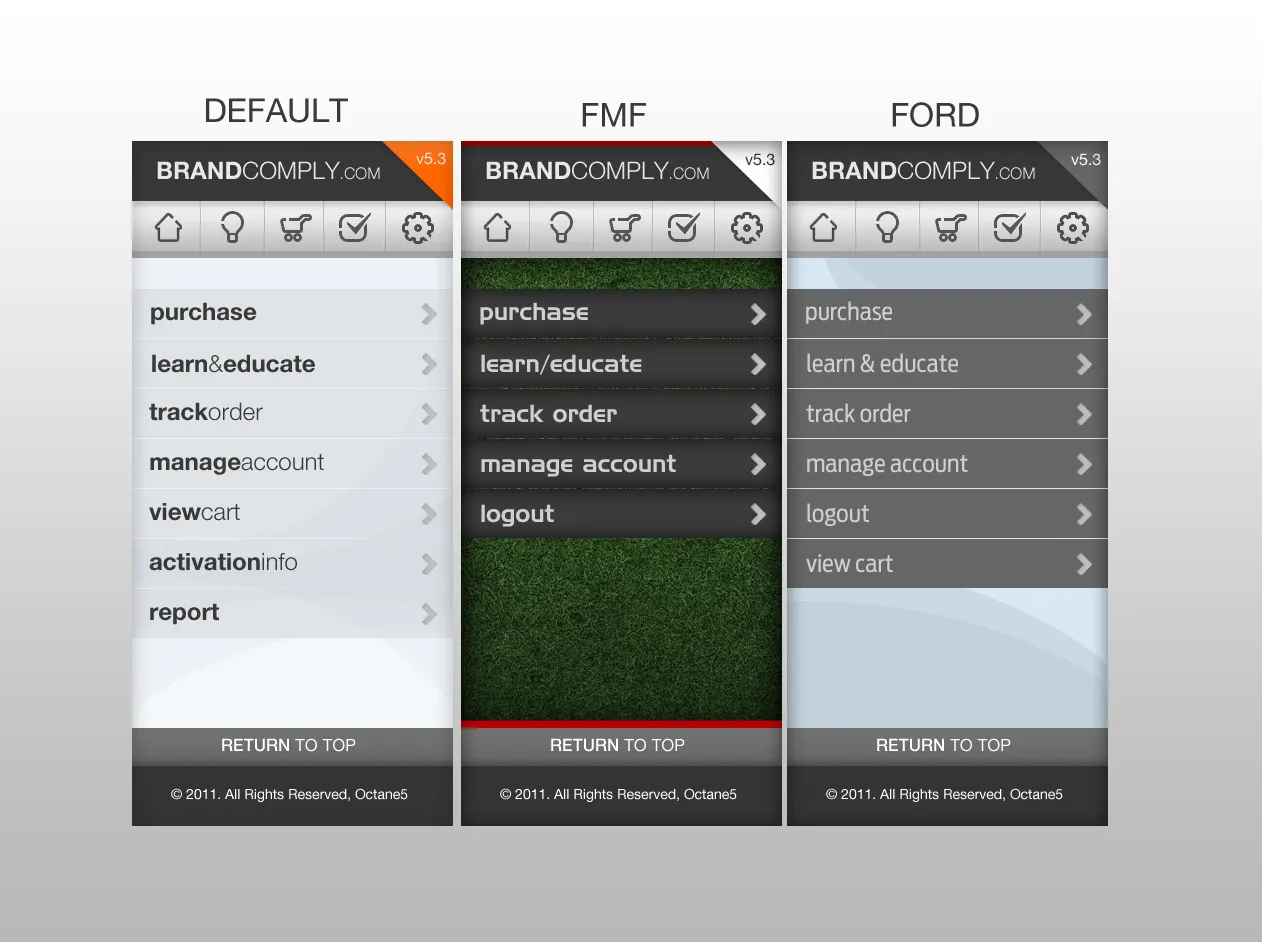
BC Mobile in the default, FMF and Ford themes. Design comp, 2011.
BC Mobile was the iPhone app for brand managers on the road, built around one job: swipe through pending submissions and approve or reject them.
The numbers part
Royalties are where licensing gets real money involved, so the reporting had to be good. I built the dashboards in D3, and the Royalty Report Builder let licensees and brands slice units, royalties and sales by channel, territory, SKU and date range without asking anyone for a spreadsheet.
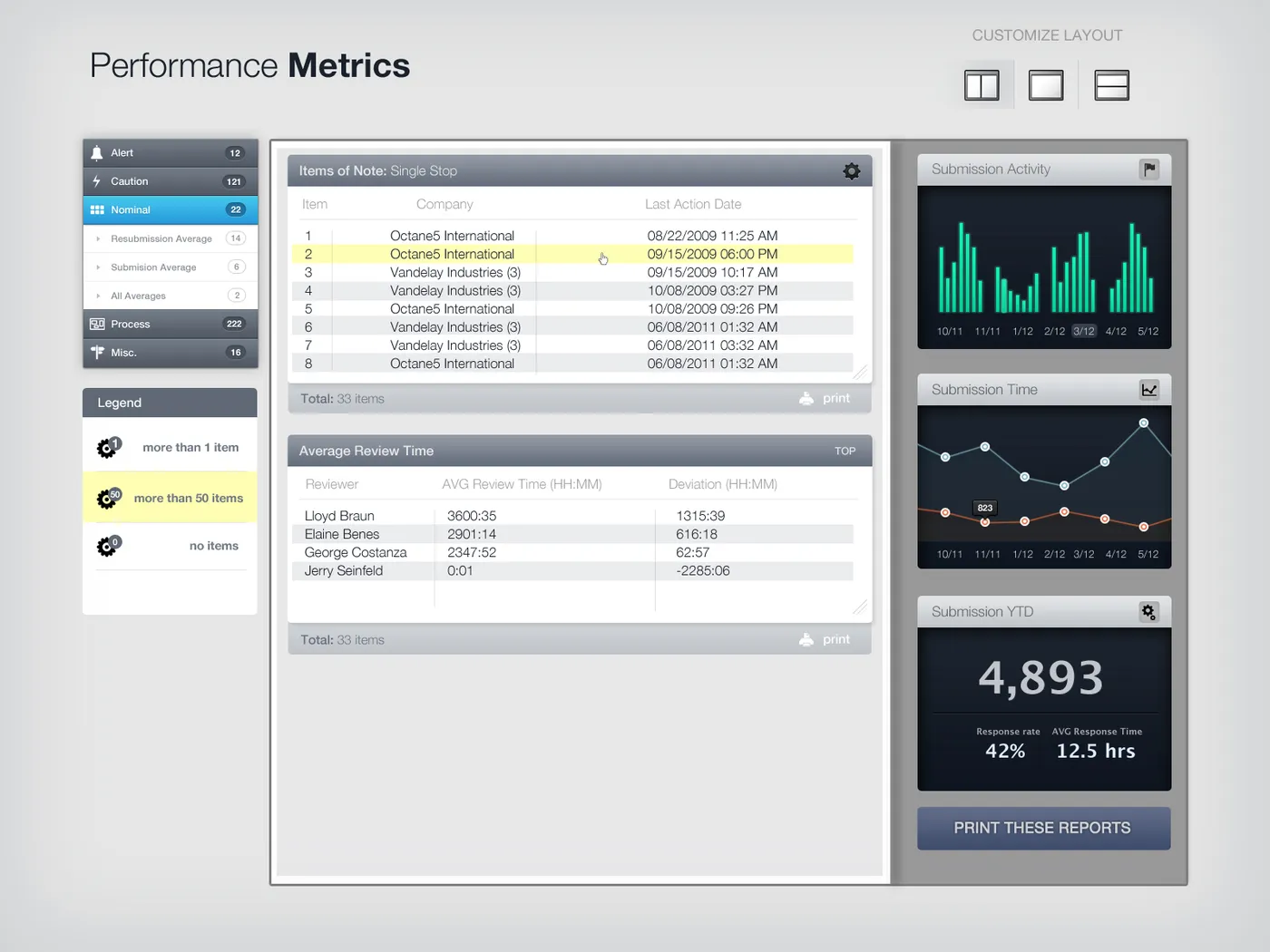
Performance Metrics. The reviewer names are placeholders: whoever made this comp was a Seinfeld fan. Design comp, 2012.
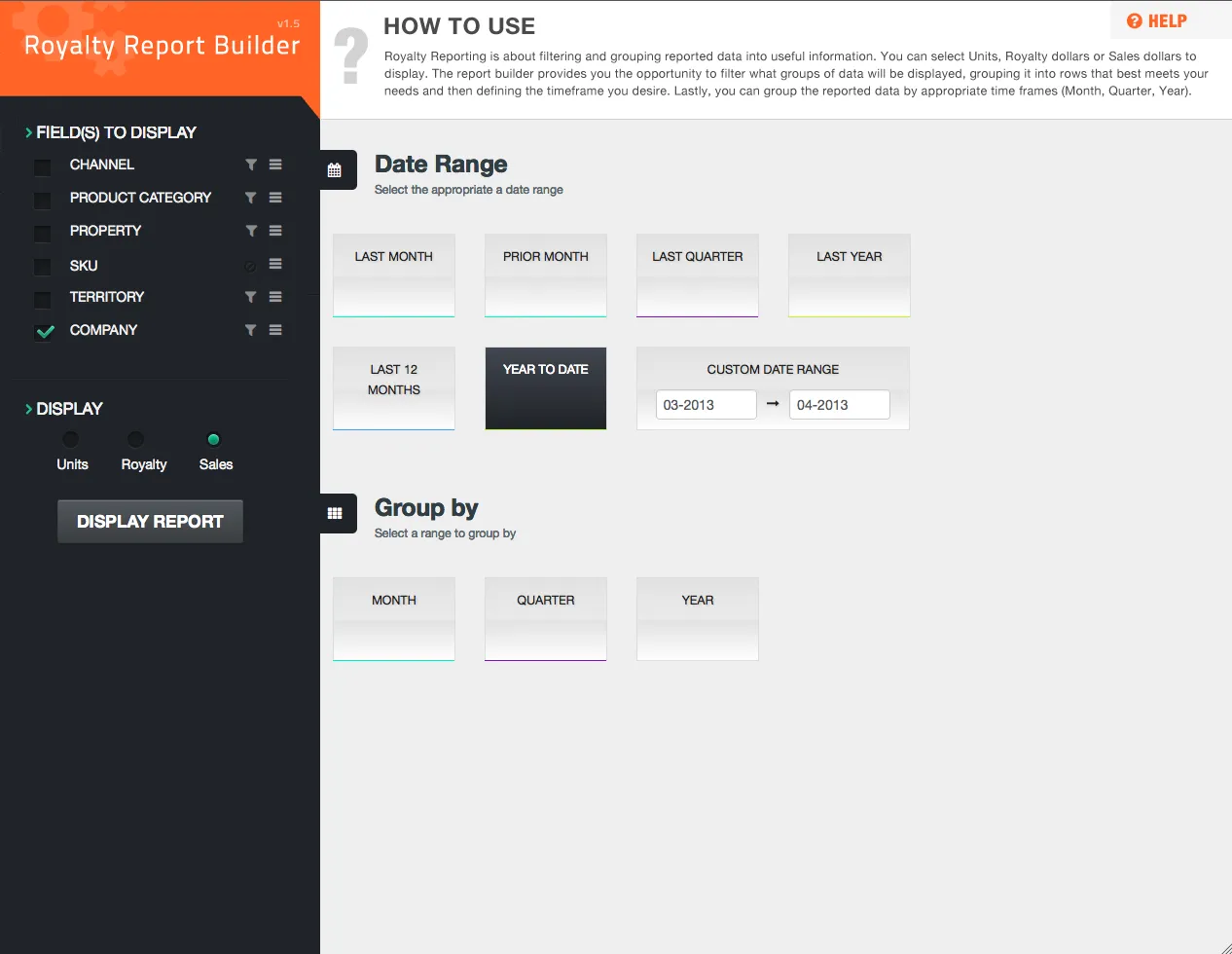
The Royalty Report Builder, version 1.5. Design comp, 2013.
Also at Octane5
Alongside BrandComply I did front-end and campaign work for brands including Nike, Coca-Cola and Mattel, wrote the company’s own brand standards, and kept a few legacy Django apps alive.
My IHG work at ICF Next has its own page.